Your customers trust your brand — not the brand of whoever happens to manufacture the product. Private-label sourcing is how growing product lines fill catalog gaps without building a factory: choose the right manufacturer, put your logo on the unit and the box, and sell it as yours. Here's how it works, based on an order we just shipped.
A real example: pond timers, their brand
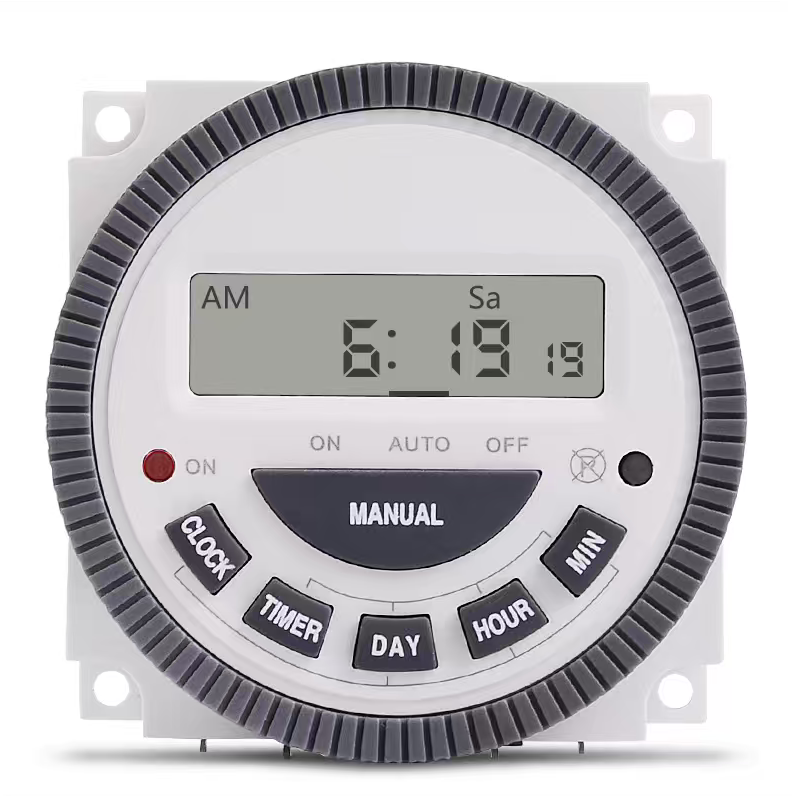
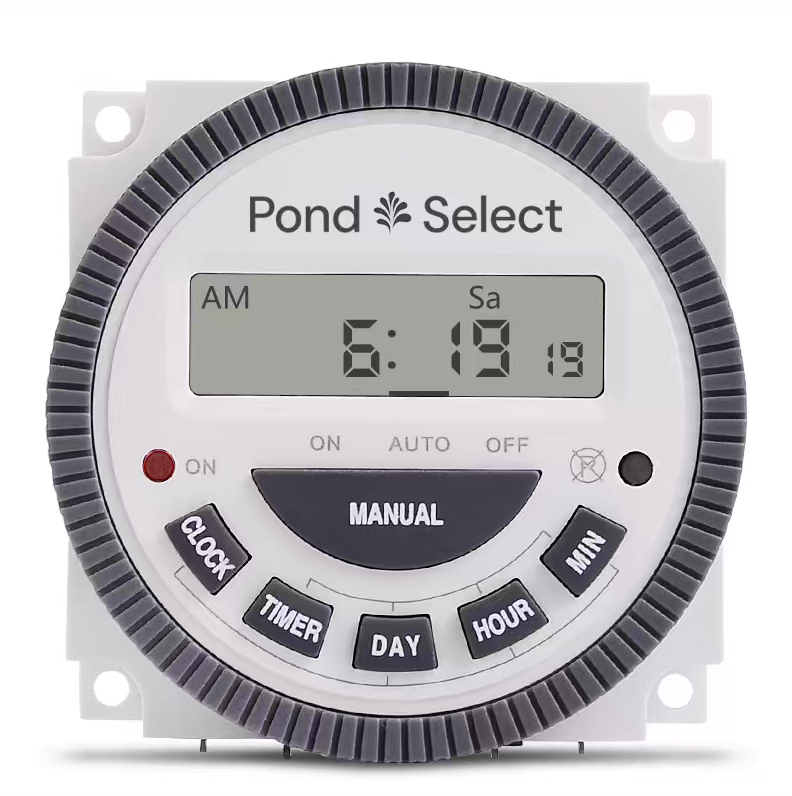
A pond and fountain equipment supplier wanted to round out their line with outdoor timers — the kind their customers already buy to run pumps, aerators, and lighting. Tooling up electronics manufacturing from scratch was never on the table. Instead, we sourced a proven timer from a vetted factory and had the customer's branding applied in two places: printed on the timer unit itself, and on the retail packaging.
When the shipment arrives at their warehouse, there's nothing left to do. It's their product, in their box, ready for their shelf and their web store — and their customers never see another company's name.
White label, private label, OEM — know which one you're buying
These terms get used interchangeably, but they're three different deals with different costs and different levels of control:
| Model | What it is | Trade-off |
|---|---|---|
| White label | The factory's existing product, exactly as-is, with your logo on it. | Fastest and cheapest — but a competitor can sell a nearly identical unit tomorrow. |
| Private label | The factory's product with your branding and your choices — packaging, color, accessories, spec tweaks. The timer order ran this way. | The sweet spot for most catalogs: differentiated where customers can see it, without engineering cost. |
| OEM / custom | Built to your design from the ground up — like the machined fountain nozzles we engineer for aquatics clients. | Maximum control and defensibility; requires engineering and tooling investment. |
How a private-label order actually runs
Base product & factory
Vet the manufacturer — a real factory, not a trading company — and get stock samples in hand. For electrical goods, confirm the certifications your market requires and the weatherproof rating the application demands before any branding talk.
Artwork on the unit
Supply your logo as vector art (AI, EPS, or PDF — never a screenshot) with Pantone color callouts. The print method is matched to the part: pad printing for curved plastic, silkscreen for flat surfaces, molded-in branding at higher volumes.
The retail box
Packaging is half the point. Your artwork on the factory's box dieline, your UPC barcode, a manual with your support contact — plus master-carton markings so receiving at your warehouse is painless.
Approval, QC, delivery
You sign off on a branded pre-production sample before the run starts — never after. Inspection happens before the goods leave the factory, and the order ships DDP so the landed price is the whole price.
What it costs
Less than most people expect — and not where they expect it. The branding itself adds little to the per-unit price. The real numbers are the one-time setup charges (print fixtures, packaging printing plates) and the minimum order quantity, which is usually driven by the packaging print run rather than the product itself. That's why private labeling rewards a committed catalog item and punishes a toe-dip.
The details that bite people later
— Own your artwork and your mark. Keep the vector masters and packaging dielines in your own files, and register the trademark in the market where you sell. Your brand should be portable to another factory if it ever needs to be.
— Ask about exclusivity. Factories sell to many buyers. Understand what they will and won't offer other customers — colorways, regions, or the branded configuration itself.
— Your name on the box means your phone rings. Warranty claims come to you, not the factory. Negotiate a defect allowance or spare-parts stock as part of the order, not after the first return.
— Spec colors like an engineer. "Match our website" is not a color. Pantone numbers on the artwork file are the difference between a consistent brand and a drifting one.
Want your brand on the product — and the box?
From machined components to finished goods like the timers above, we run the whole private-label chain: factory vetting, sampling, unit and packaging branding, QC, and DDP delivery to your warehouse. Send us the product and your logo, and we'll come back with a plan.
Get a Free Quote →